Building a base isn’t just about placing walls and towers. In the best strategy base building games, every structure, supply line, and defensive layout is a calculated decision with consequences that ripple across hours of gameplay. These titles demand foresight, adaptability, and an eye for efficiency—whether you’re constructing a futuristic colony on Mars or fortifying a medieval stronghold against waves of enemies.
What separates great base builders from forgettable ones is depth. The genre thrives on systems that interact: resource scarcity affects expansion speed, which impacts defense readiness, which influences your ability to launch counterattacks. The most satisfying games turn base management into a dynamic puzzle—one where the solution evolves with every new challenge.
Here’s a look at the top strategy base building games that deliver on complexity, immersion, and long-term engagement.
---
Why Base Building Games Are Addictive
Base building taps into a core human instinct: creation with purpose. It’s not enough to build something—it must function, survive, and ideally, thrive. That’s where strategy comes in.
In these games, your base is both a shield and a weapon. A poorly placed power generator can cripple an entire operation. An overextended mine might invite sabotage. Over-investing in offense could leave you vulnerable to economic collapse. The balance is delicate, and the stakes feel real.
Players return because progress is tangible. You start with a single outpost and grow into a sprawling network of facilities, each decision compounding into a unique playstyle. Whether you're managing population happiness in a city builder or rerouting power during a zombie siege, the feedback loop is immediate and deeply rewarding.
Common mistakes? Rushing expansion before securing supply lines. Neglecting research trees. Underestimating environmental threats. The best players don’t just react—they anticipate.
---
Top Strategy Base Building Games in 2024
These titles represent the pinnacle of the genre, combining deep mechanics with compelling long-term goals.
#### 1. Frostpunk Set in a frozen apocalypse, Frostpunk forces players to manage not just infrastructure but morality. Your city’s heat source is central—everything radiates from it. Build too far out, and sections freeze. Enforce too many harsh laws, and unrest grows. The game’s twist? Survival often requires sacrificing ethics. It’s a base builder fused with narrative consequence, where every law enacted alters the social fabric.
Realistic use case: You’re 15 minutes from a storm that will drop temperatures below survivable levels. Do you fast-track the coal power upgrade and risk worker strikes? Or rely on risky scavenger teams to find prefabs?
#### 2. RimWorld A colony sim with emergent storytelling. Three survivors land on a hostile planet. One’s a former dentist with poor social skills. The other has combat training but a violent temper. Over time, relationships form, mental breaks occur, and wars erupt over food shortages. Base layout matters—kitchens near dorms, medical bays near entrances for triage, workshops shielded from raids.
Tip: Early-game, prioritize growing vegetables over meat. Protein is tempting, but animals require space, care, and butcher tables. Carrots save lives.
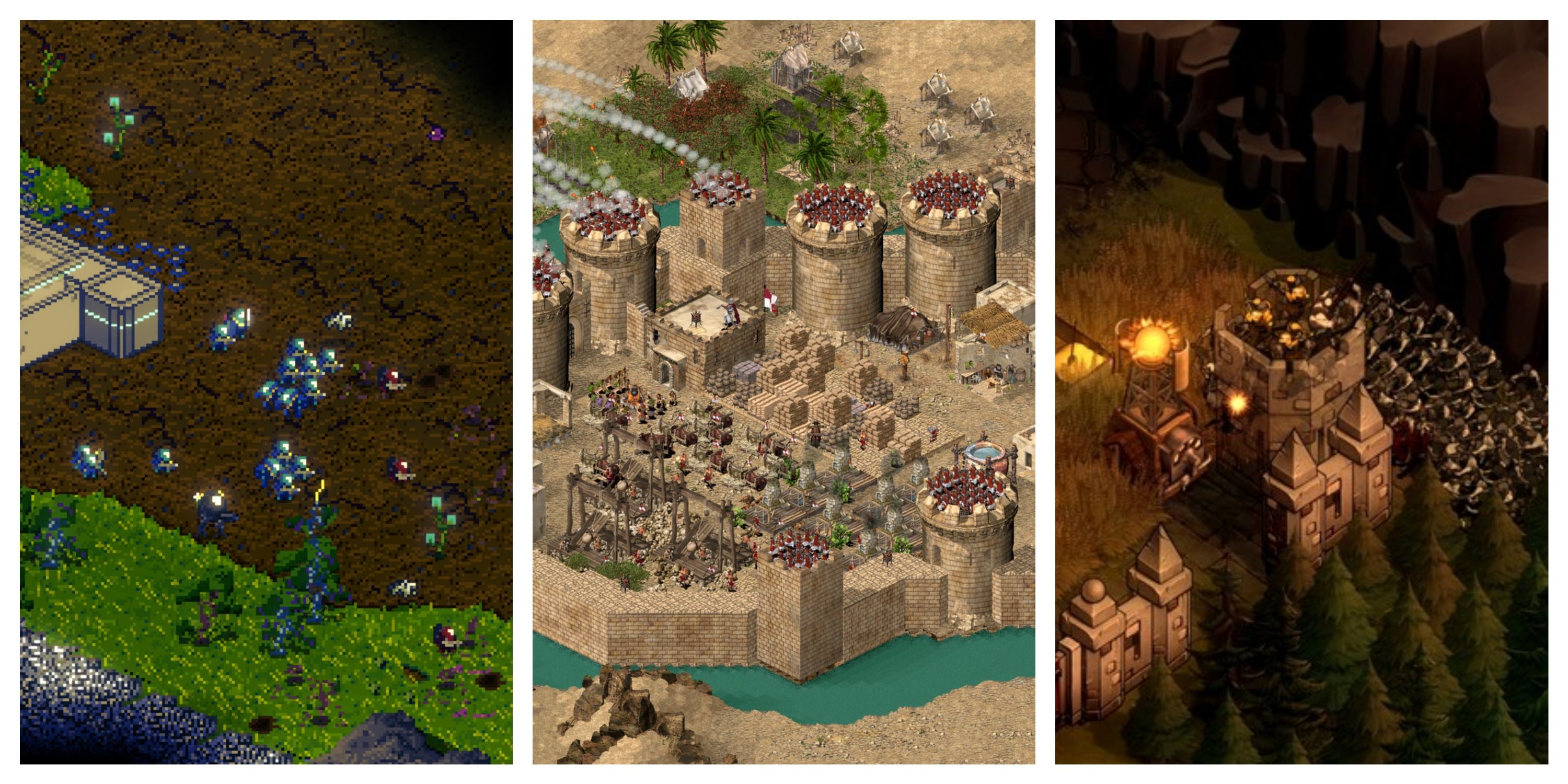
#### 3. Factorio Pure industrial automation. You land on an alien world, mine iron, and soon you’re building conveyor belts, automated smelters, and rocket silos. The base grows like a circuit board—efficient, sprawling, and mesmerizing. The challenge? Keep throughput balanced. A bottleneck in copper supply halts laser turret production, leaving your defenses exposed during an alien assault.
Workflow insight: Use train networks early. Belts work for short distances, but trains prevent gridlock in mid-to-late game.
#### 4. Satisfactory First-person base building in an open world. Climb mountains, drive trucks, and construct multi-level factories across vast biomes. Unlike Factorio, you’re inside the world—personally placing nodes, rotating structures, and watching your creation come alive in 3D. Power management is critical: coal plants pollute, nuclear requires rare elements, and geothermal is location-locked.
Limitation: The game lacks strong enemy AI. Threats exist, but combat isn’t the focus. The real opponent is inefficiency.
#### 5. Against the Storm A roguelike city builder set in a perpetually storm-battered realm. Each run lasts 20–40 minutes. You manage a settlement of fantasy races—beavers, lizardmen, humans—each with unique needs. The storm’s intensity increases over time, forcing faster progression. Random events—like cursed wells or migrant surges—keep strategies fluid.
Key insight: Don’t optimize for perfection. Adapt. A broken bakery might mean shifting to hunting for food. Flexibility beats rigid planning.
---
Real-Time vs. Turn-Based: Which
Fits Your Style?
Not all base builders play the same. The pacing defines the experience.
Real-time strategy (RTS) games like Supreme Commander or Grey Goo demand constant attention. You manage economy, research, and combat simultaneously. A lapse in unit production could mean losing your forward base. These games reward multitasking and rapid decision-making.
Example: In Grey Goo, the Goo faction spreads like mold. You don’t build structures—you grow them. Expansion is biological, making territory control feel organic and aggressive.
Turn-based games like Terraformers or Jagged Alliance 3 let you plan methodically. Each turn is a chance to reassess, reposition, and optimize. There’s no pressure from an enemy’s real-time assault—just strategic depth.
Example: In Jagged Alliance 3, base building is tied to capturing sectors. Each location offers resources, recruitment options, or tactical advantages. You’re not just building a base—you’re building a war machine, one village at a time.
Verdict: If you thrive under pressure and love dynamic action, go real-time. If you prefer deep analysis and layered planning, turn-based will satisfy.
Neither is superior—just different flavors of strategy.
---
Survival Elements That Elevate Base Building
Many modern base builders integrate survival mechanics. Hunger, temperature, mental health—these aren’t just stats. They’re design levers that force trade-offs.
In Project Zomboid, building a secure base is essential, but so is growing food and managing fatigue. You can’t fight zombies at 3 a.m. if your character is exhausted. The base must support human needs, not just tactical ones.
In Valheim, base location affects gameplay dramatically. Building near a swamp invites draugr raids. Placing it too far from resources slows progress. And if you don’t reinforce your roof, trolls will tear it apart.
Practical tip: In survival base builders, automate early. Set up rainwater collectors, assign crop fields, and create weapon repair stations. The less time spent on chores, the more you can explore or prepare for threats.
These systems prevent base building from becoming a sterile optimization puzzle. They ground it in struggle.
---
Base Building in Multiplayer:
Cooperation and Conflict
Multiplayer adds unpredictability. Whether cooperating or competing, human players change the equation.
In Ark: Survival Evolved, clans build massive cliffside fortresses, linking elevators, turrets, and dinosaur pens. But trust is fragile. Betrayals happen. A teammate might steal blueprints or sabotage generators before logging off.
In Rust, the base is your identity. Players spend weeks constructing hidden bunkers, trap-filled towers, and decoy bases. The endgame isn’t victory—it’s survival against hunters, raiders, and sometimes, friends.
Workflow insight: In PvP base builders, obscurity is defense. Don’t build on hills. Avoid straight walls (they’re weak to explosives). Use tunnels, fake entrances, and buried loot rooms.
Co-op games like Conan Exiles let teams divide roles: one manages food, another handles defense, a third explores. Communication becomes part of the strategy.
---
Hidden Challenges in Base Building
Design
Even experienced players overlook subtle pitfalls.
- Overextension: Expanding too fast drains resources and creates undefendable frontiers.
- Single Point of Failure: Relying on one power source or supply route risks total collapse if compromised.
- Ignoring Upgrades: Focusing on new buildings instead of upgrading existing ones leads to inefficiency.
- Poor Zoning: Placing noisy factories next to dorms causes unrest in games with morale systems.
Checklist for solid base design: - [ ] Power sources distributed and backed up - [ ] Supply lines redundant and protected - [ ] Defensive perimeters layered (outer wall, traps, inner chokepoints) - [ ] Research or production trees balanced with immediate needs - [ ] Evacuation or fallback plan in case of breach
Anticipate failure. The best bases aren’t the biggest—they’re the most adaptable.
---
The Future of Strategy Base Building
Games
Emerging titles are blending genres in bold ways.
Warfrogs combines base building with fast-paced tactical combat—think Clash Royale meets StarCraft. You deploy units in real-time, but base upgrades between matches define your edge.
Oxygen Not Included merges base building with physics-driven survival. Heat spreads, gases stratify, and pipe pressure matters. Build a CO2 scrubber too close to a methane vent, and you’ll have a bomb.
VR is also creeping in. Terra Nil—a reverse city builder where you restore ecosystems—could translate beautifully to immersive environments, letting players “walk through” their reforested worlds.
The trend? Systems that interact in meaningful, sometimes unexpected ways. The base isn’t just a backdrop—it’s a living system.
---
Great strategy base building games don’t hand you victory. They force you to earn it—one blueprint, one resource node, one crisis at a time. Whether you’re managing the last coal generator on Earth or automating a factory on an alien planet, the thrill lies in turning chaos into order.
Pick a game that matches your patience, mindset, and love of complexity. Build smart. Adapt faster. And remember: the best base isn’t the one that stands tallest—it’s the one that still stands when everything else has fallen.