Most toolbox talks fail before they start—not because the content is bad, but because they’re delivered like a chore. Workers zone out, the speaker rushes through slides, and nothing changes the next day. The real goal isn’t just to check a compliance box. It’s to shift behavior. To make safety personal. That only happens when you know how to deliver a toolbox talk with purpose, clarity, and connection.
Here’s how to move beyond the monologue and run a session that sticks.
Why Most Toolbox Talks Fall Flat
People assume a toolbox talk is just a quick safety reminder before the workday begins. In practice, it often becomes a robotic read-through of generic hazards. The speaker stands, reads from a printout, asks “any questions?” to silence, and walks away thinking the job is done.
But disengaged delivery kills impact. A 2022 study of construction sites found that 68% of workers couldn’t recall the topic of the previous day’s toolbox talk. That’s not a knowledge problem—it’s a delivery problem.
Common pitfalls: - No audience awareness – Talking over people instead of with them. - Vague content – “Be safe around machinery” doesn’t help anyone. - No interaction – One-way delivery kills retention. - Poor timing – Done when people are rushing to start work. - Lack of relevance – Using a canned topic that doesn’t match the day’s tasks.
Fixing these starts with redefining what a successful toolbox talk looks like: short, specific, interactive, and tied directly to the work being done today.
Step 1: Choose the Right Topic—One That Matters Today
The most effective toolbox talks are reactive and hyper-relevant. Don’t recycle last week’s topic on PPE unless you’ve seen actual issues with PPE use in the last 48 hours.
Instead, ask: - What task is the crew doing today? - What hazards are present on this site right now? - Has there been a near miss, incident, or safety observation recently?
Example: If a team is starting roof work, do a 10-minute talk on fall protection anchorage points—specifically how to inspect the system on this structure. Show photos of the actual roof, point out anchor zones, and walk through the harness check.
Generic topics have their place, but real behavior change happens when the talk feels urgent and immediate.
Step 2: Structure It Like a Conversation, Not a Lecture
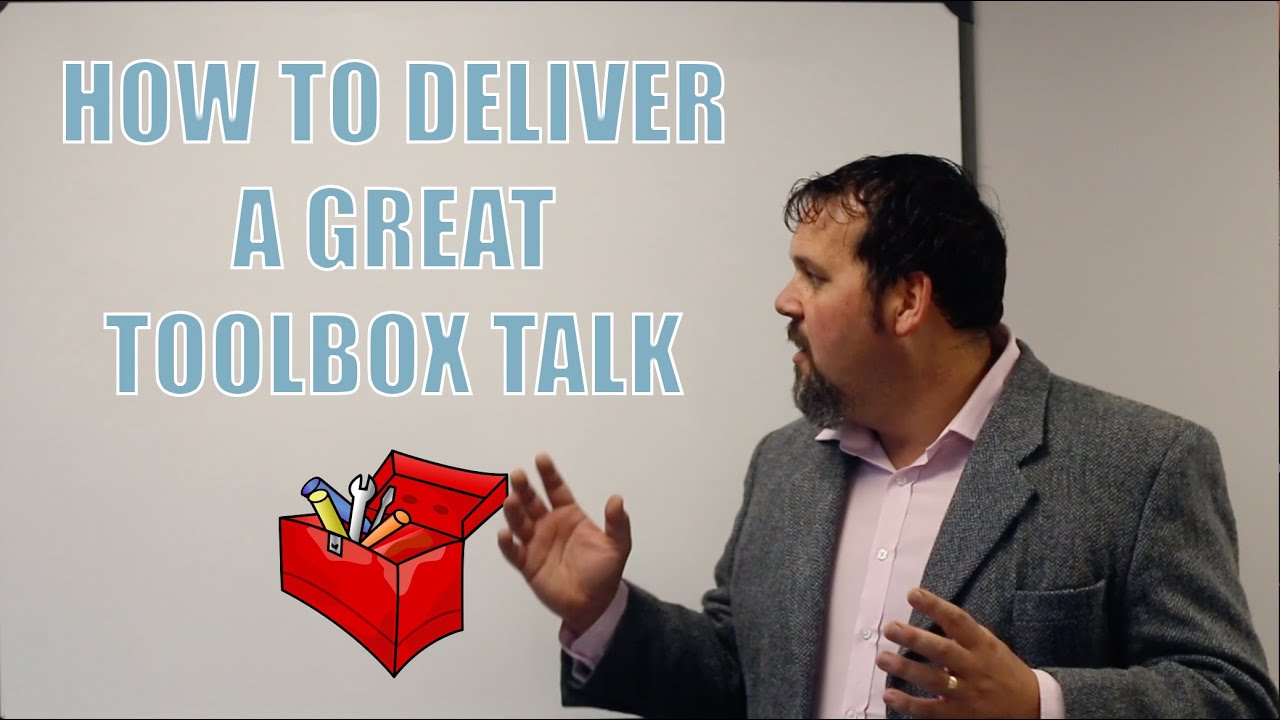
Forget standing and reading. Design the talk around interaction. Use this simple 5-part framework:
- Hook (1 min) – Start with a question or observation.
- “Did anyone see that ladder placement near the scaffolding yesterday? Let’s talk about why that’s a risk.”
- Hazard Breakdown (3 min) – Explain the risk clearly.
- Break it into: What can go wrong, how it happens, and how it affects real people.
- Best Practice (2 min) – Show the right way.
- Use real gear, gestures, or a quick demo. “This is how we secure the harness to this anchor point.”
- Interactive Check (3 min) – Get input.
- “What would you do if the back-up lanyard was damaged?” or “Show me your hand signal for crane stop.”
- Close with Commitment (1 min) – End with action.
- “Today, every time you climb, check your harness anchor first. I’ll be watching for that.”
This structure keeps energy high and ensures workers aren’t just hearing—they’re doing.
Step 3: Know Your Audience and Adjust Your Style
Not every team responds to the same tone. A crew of veteran electricians needs less hand-holding than a group of new laborers. A morning shift may be alert; an afternoon shift might be fatigued.
Adjust accordingly: - For experienced crews: Go deeper. Discuss edge cases, past incidents, or subtle signal misinterpretations. - For new workers: Define terms, slow down, and use more visuals. - For high-risk tasks: Increase intensity. Use real incident videos (when appropriate) or near-miss stories.
One foreman on a pipeline project starts each talk by asking, “What’s one safety thing you’re watching for today?” It takes 30 seconds, but it primes everyone to think proactively.
Step 4: Use Visuals and Real Tools—Not Just Words
People remember what they see and do. A printed checklist is better than nothing, but it’s not enough.
Better options: - Hold up the actual safety equipment. - Sketch a hazard on a whiteboard or dirt with a stick. - Use a phone to show a photo of a close call from another site. - Share a 30-second clip of correct vs. incorrect procedure.
Real use case: A crew preparing for confined space entry did a toolbox talk where the supervisor brought in the gas detector, turned it on, and showed the screen during calibration. He asked each worker to read the levels and interpret them. That 7-minute talk replaced a 15-minute lecture—and test scores on the procedure doubled.
When you engage multiple senses, retention soars.
Step 5: Encourage Feedback—Then Use It
The best toolbox talks end with learning, not closure. Ask: - “What part of this process is confusing?” - “Has anyone dealt with this hazard before? How’d you handle it?” - “Is there a better way we could do this?”
One oilfield team started a “Safety Suggestion Jar”—workers drop anonymous notes with concerns. The supervisor pulls one before each talk and builds the session around it. Engagement has increased, and reported near misses are up 40%—a sign people feel safer speaking up.
If you never hear pushback, you’re either perfect… or no one’s listening.
Common Mistakes That Undermine Credibility
Even experienced leaders slip into bad habits. Watch for these:

- Rushing it – If your talk lasts 3 minutes, you skipped the conversation. Aim for 7–10.
- Using jargon – “Ensure proper LOLER compliance” means nothing to most people. Say “check crane slings for frays before lifting.”
- Talking to your notes – Make eye contact. Move around. Be present.
- Ignoring the environment – Don’t hold a talk in a noisy area or under direct sun. Find a shaded, quiet zone.
- Failing to follow up – If you say “check your harness,” walk the site later and acknowledge those who do it right.
Consistency builds trust. Workers notice when safety talks are taken seriously—or treated as a formality.
What Great Delivery Looks Like: A Field Example
Site: Urban construction, 3rd floor steel erection Crew: 8 ironworkers, 1 spotter Topic: Crane signal clarity
The supervisor began by asking, “Who’s on the hook today?” Two hands went up. He handed each a radio and said, “Show me how you’d call for a slow lift.” One used clear, standard phrases. The other hesitated.
He paused. “Let’s reset. Here’s the exact phrase—‘Raise boom slowly.’ Not ‘lift it a bit.’ Why? Because ‘a bit’ means different things to different people.”
He demonstrated with hand signals, had workers pair up and practice, then did a live call with the crane operator. The entire talk took 9 minutes.
Afterward, the crew admitted they’d been using mixed signals. Within a week, signal errors dropped to zero.
This worked because it was: - Specific to the day’s work - Interactive - Led by demonstration - Closed with accountability
That’s how you deliver a toolbox talk that matters.
Make It a Habit—Not an Event
The most effective safety cultures don’t rely on occasional standout talks. They build daily discipline.
Tips to sustain quality: - Rotate delivery among team leads—not just the foreman. - Keep a log of topics to avoid repetition. - Review past talks before starting new ones. “Last week we talked about fall arrest—how’s that going?” - Reward participation. A simple “Thanks for speaking up” reinforces engagement.
One mining operation tracks “talk completion + observed behavior change” weekly. Supervisors who show both get recognized. It’s not about volume—it’s about impact.
Final Checklist: Did You Deliver It Right?
Before you wrap up, ask yourself: - [ ] Was the topic relevant to today’s work? - [ ] Did I explain the why, not just the what? - [ ] Did at least 50% of the crew speak or respond? - [ ] Did I use a visual or real tool? - [ ] Did I end with a clear safety action? - [ ] Did I plan to follow up later?
If you can check all six, you didn’t just deliver a toolbox talk—you led a safety moment that could prevent an injury.
Great delivery isn’t about polish. It’s about precision, presence, and pushing people to act differently. Start small. Be consistent. Make it real.
FAQ
What should you look for in How to Deliver a Toolbox Talk That Actually Works? Focus on relevance, practical value, and how well the solution matches real user intent.
Is How to Deliver a Toolbox Talk That Actually Works suitable for beginners? That depends on the workflow, but a clear step-by-step approach usually makes it easier to start.
How do you compare options around How to Deliver a Toolbox Talk That Actually Works? Compare features, trust signals, limitations, pricing, and ease of implementation.
What mistakes should you avoid? Avoid generic choices, weak validation, and decisions based only on marketing claims.
What is the next best step? Shortlist the most relevant options, validate them quickly, and refine from real-world results.